

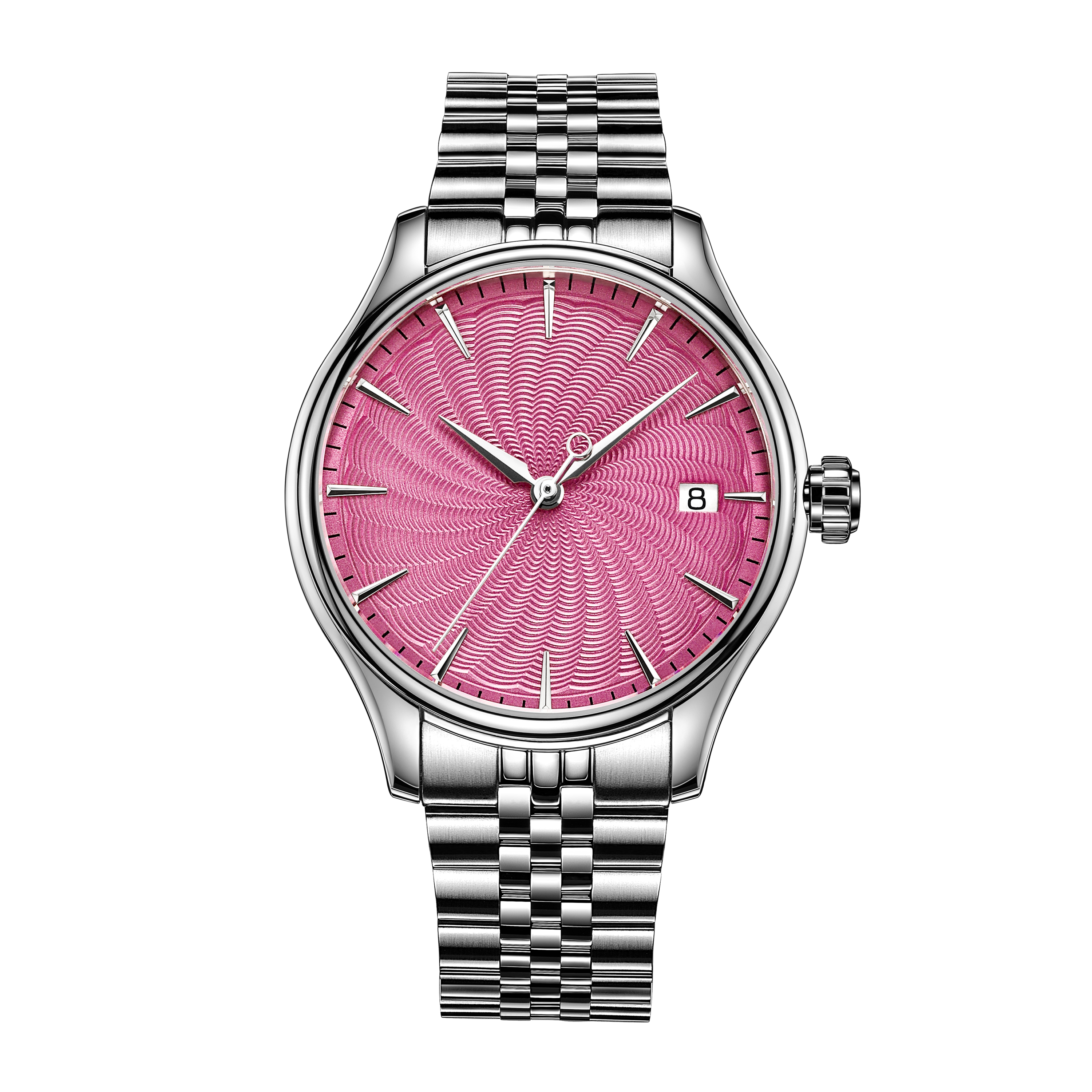
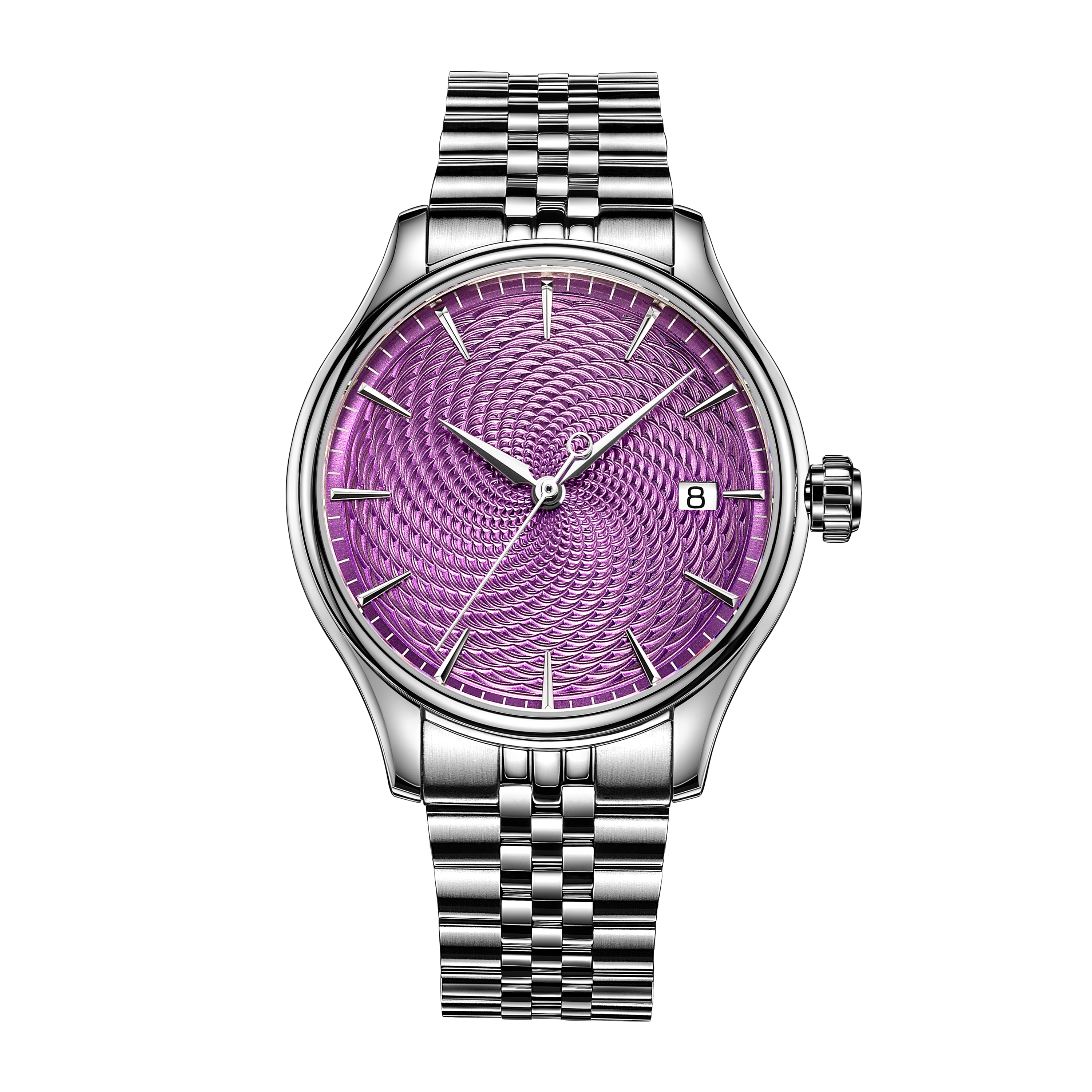
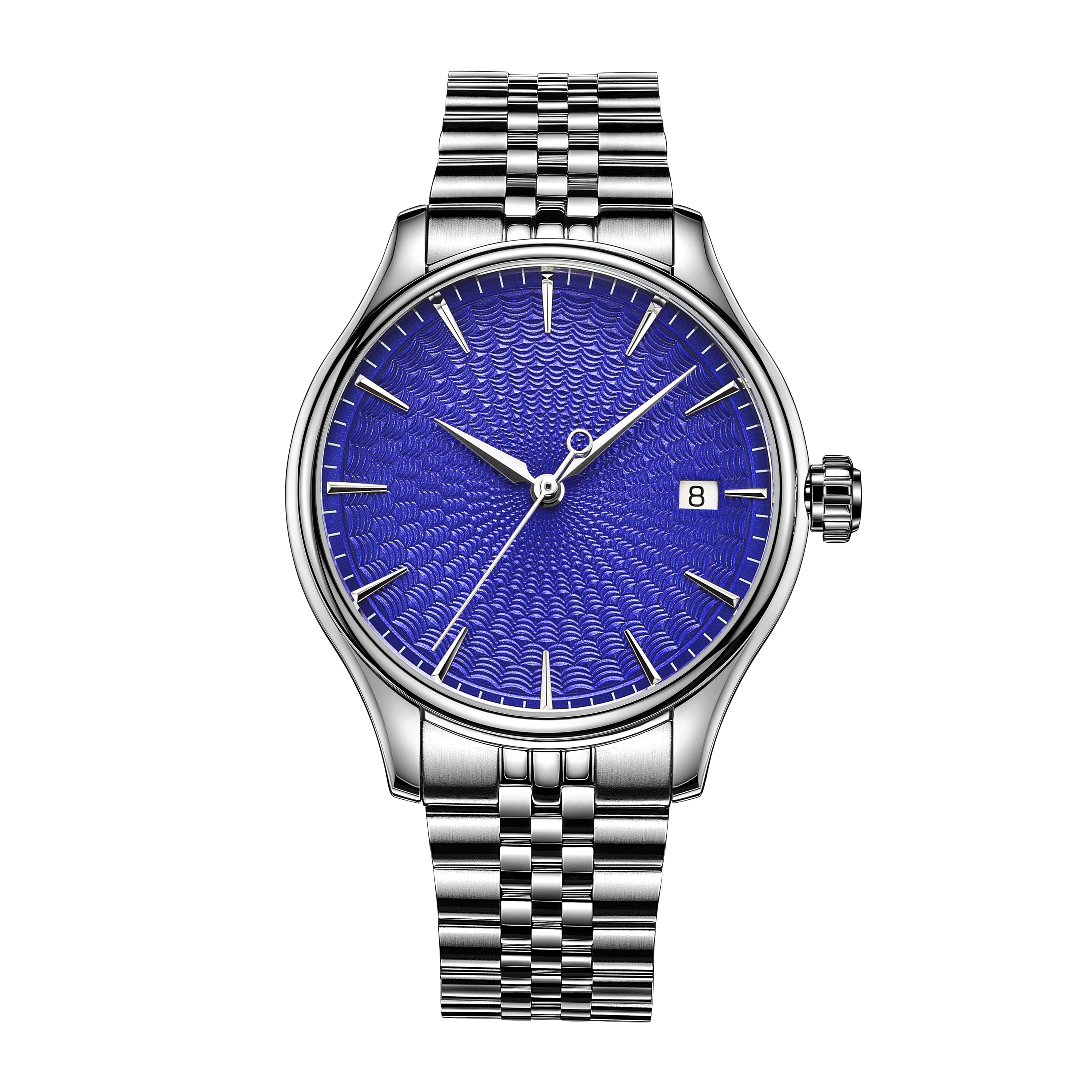
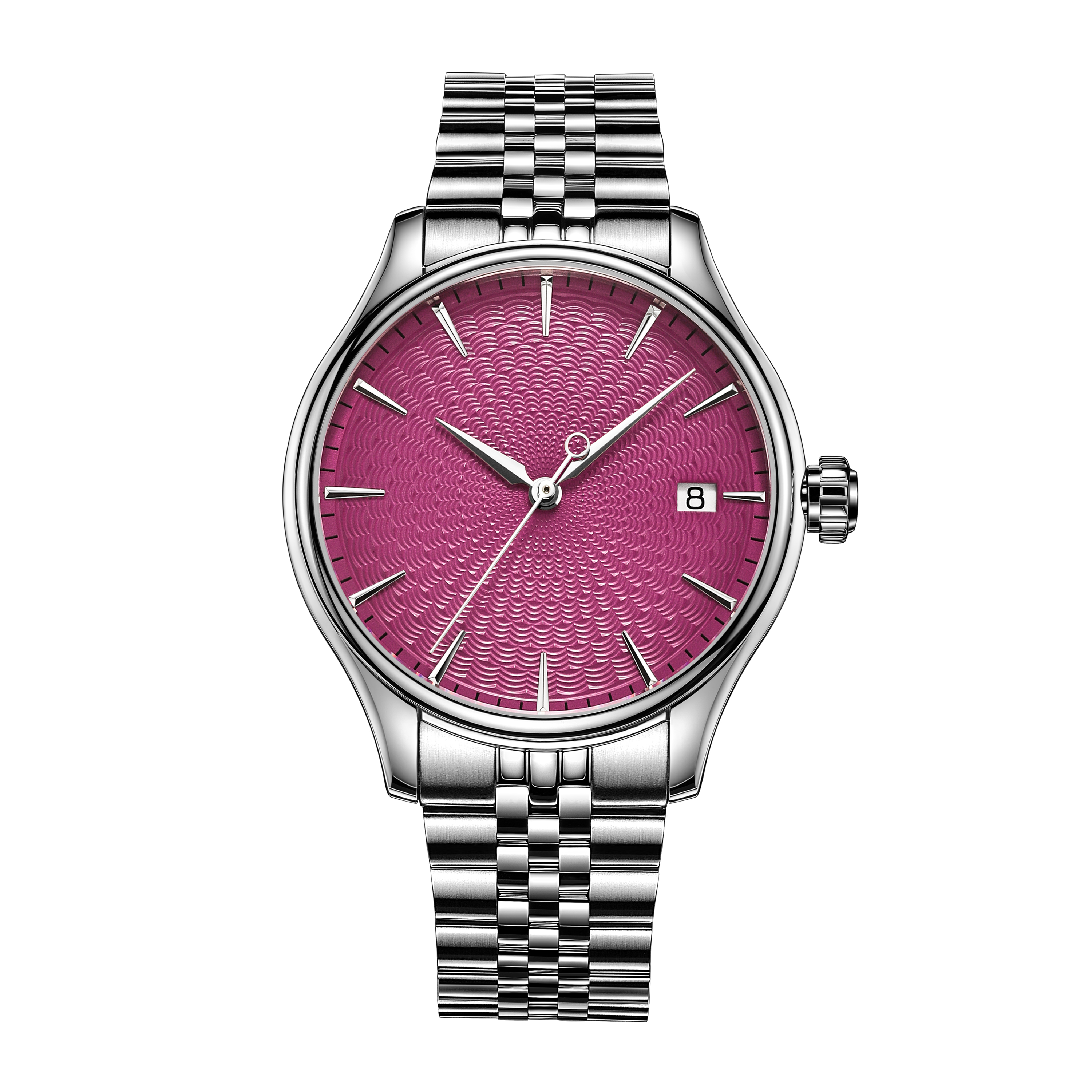
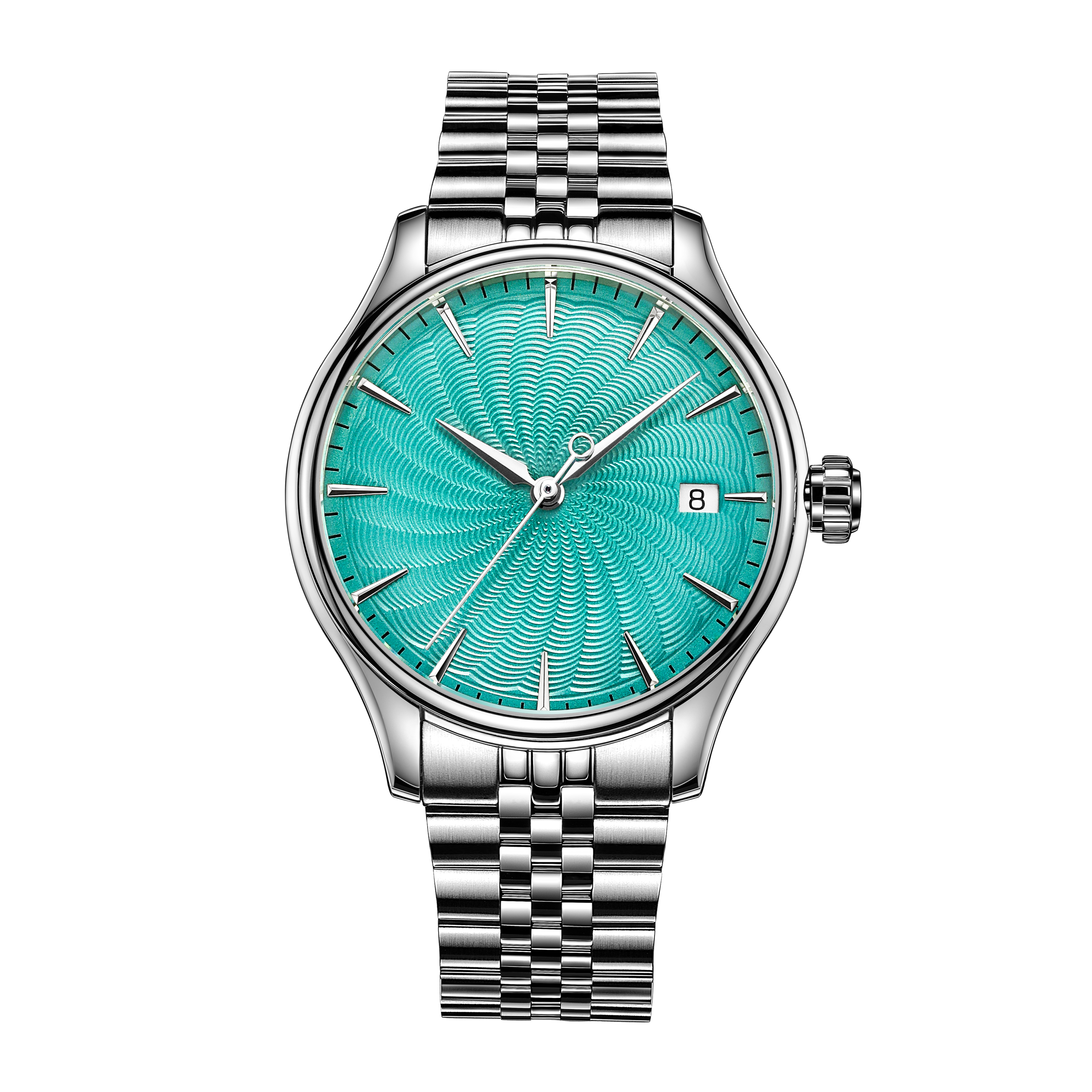
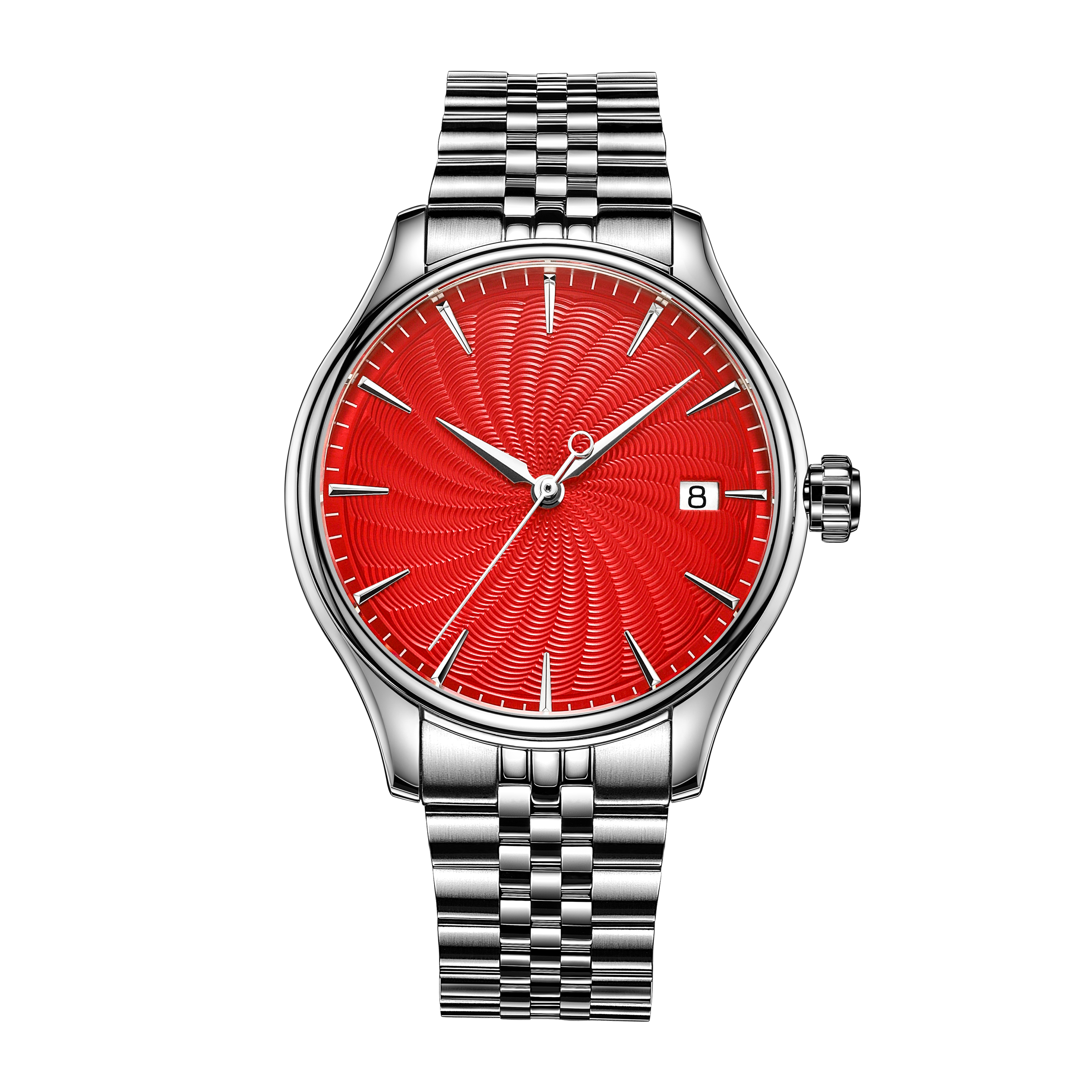
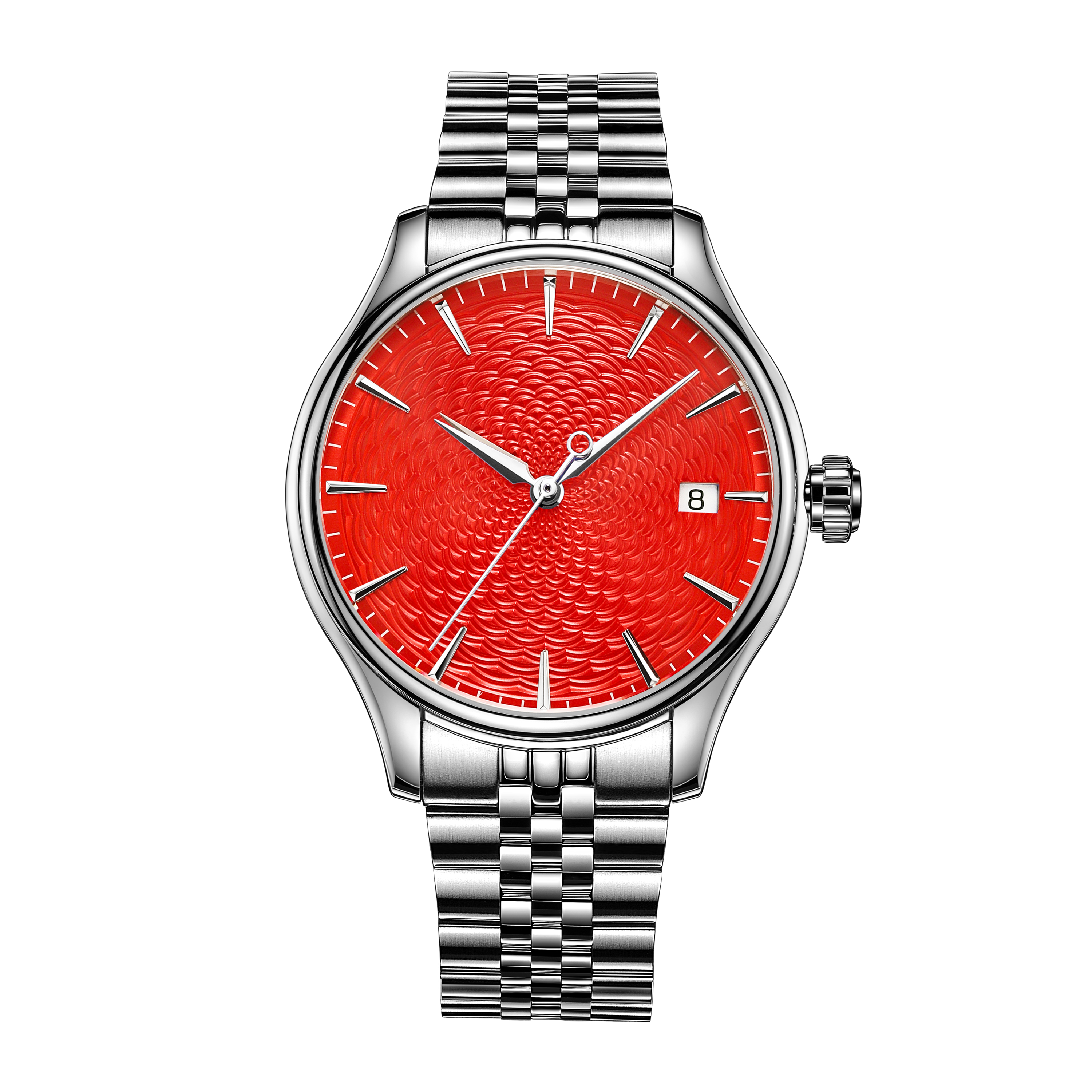
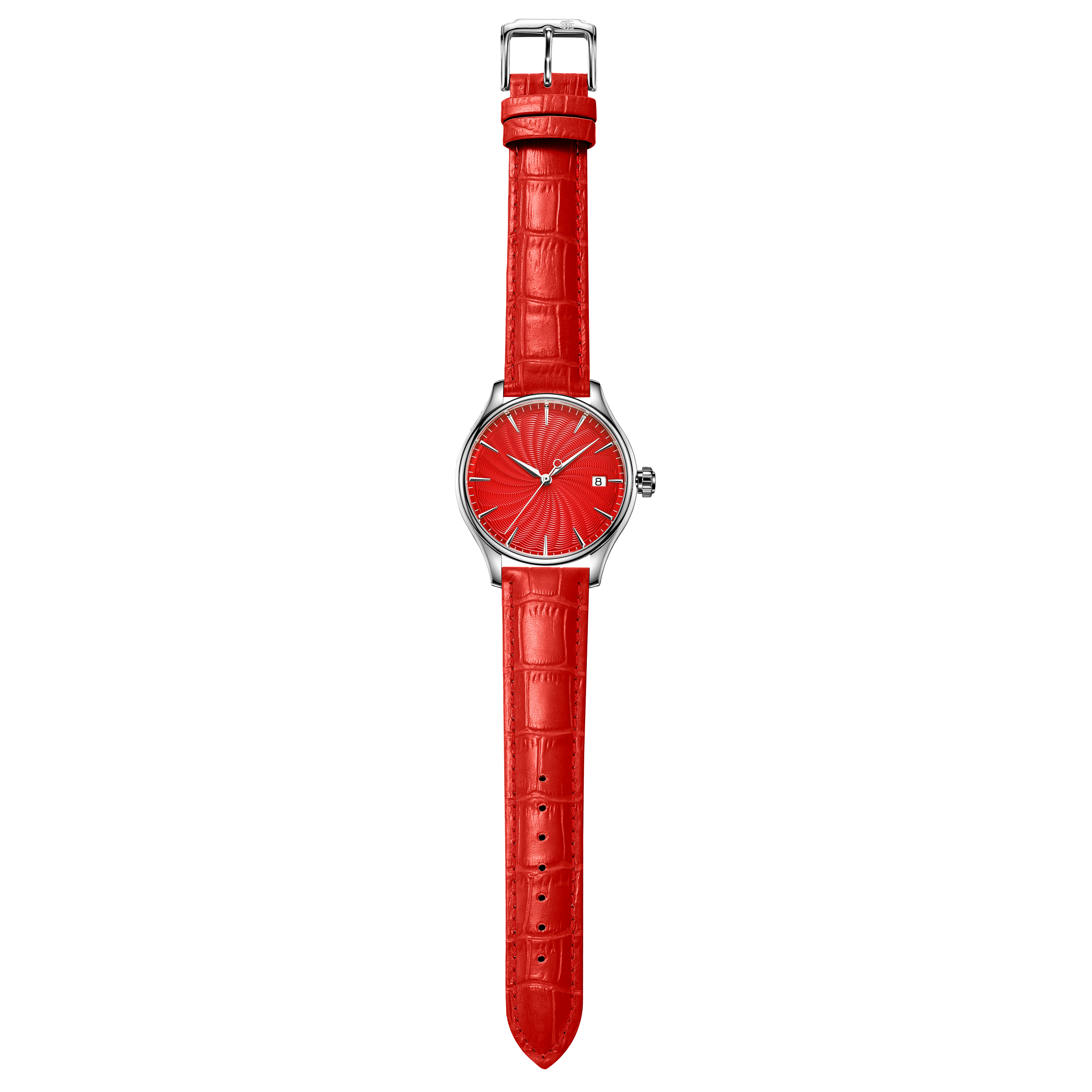
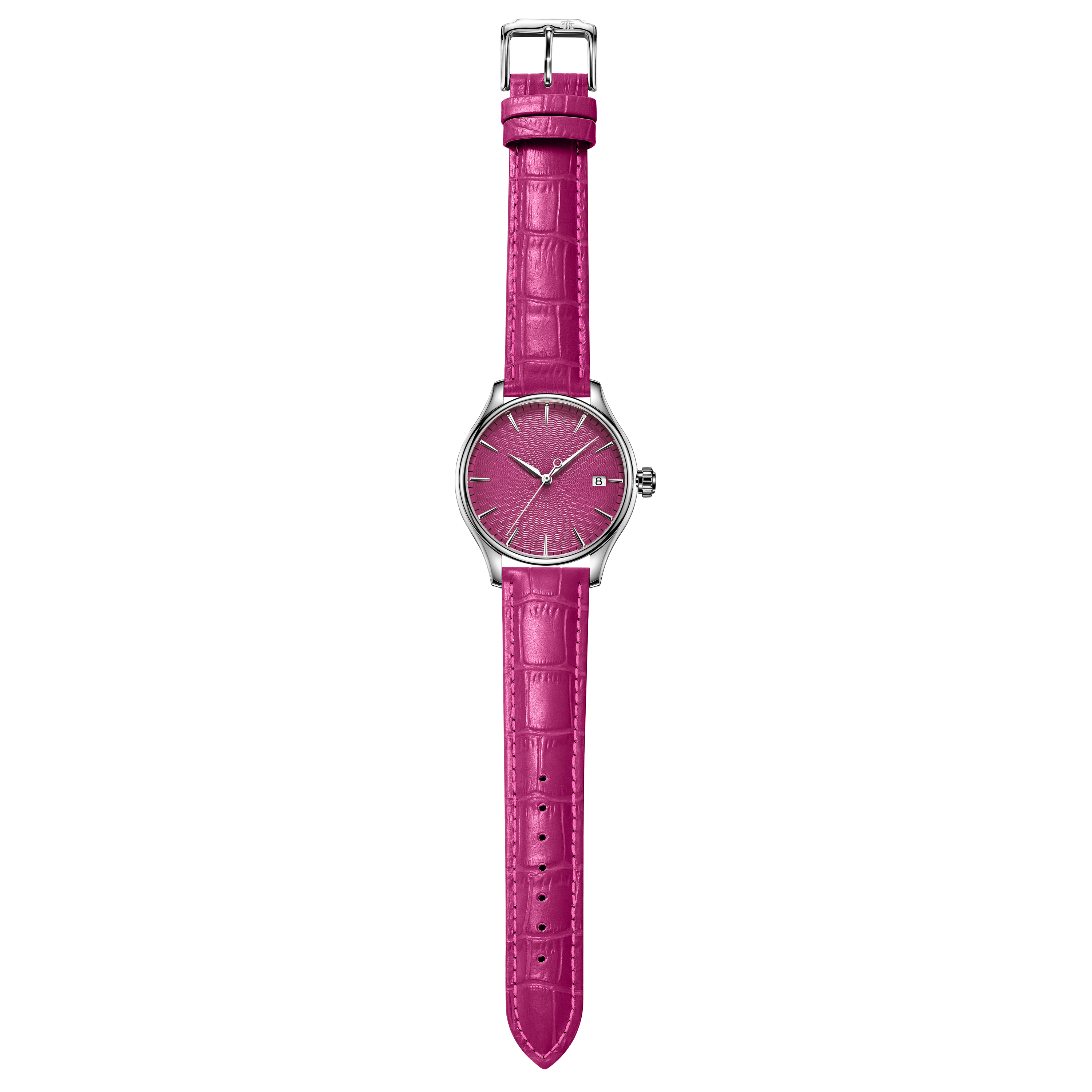
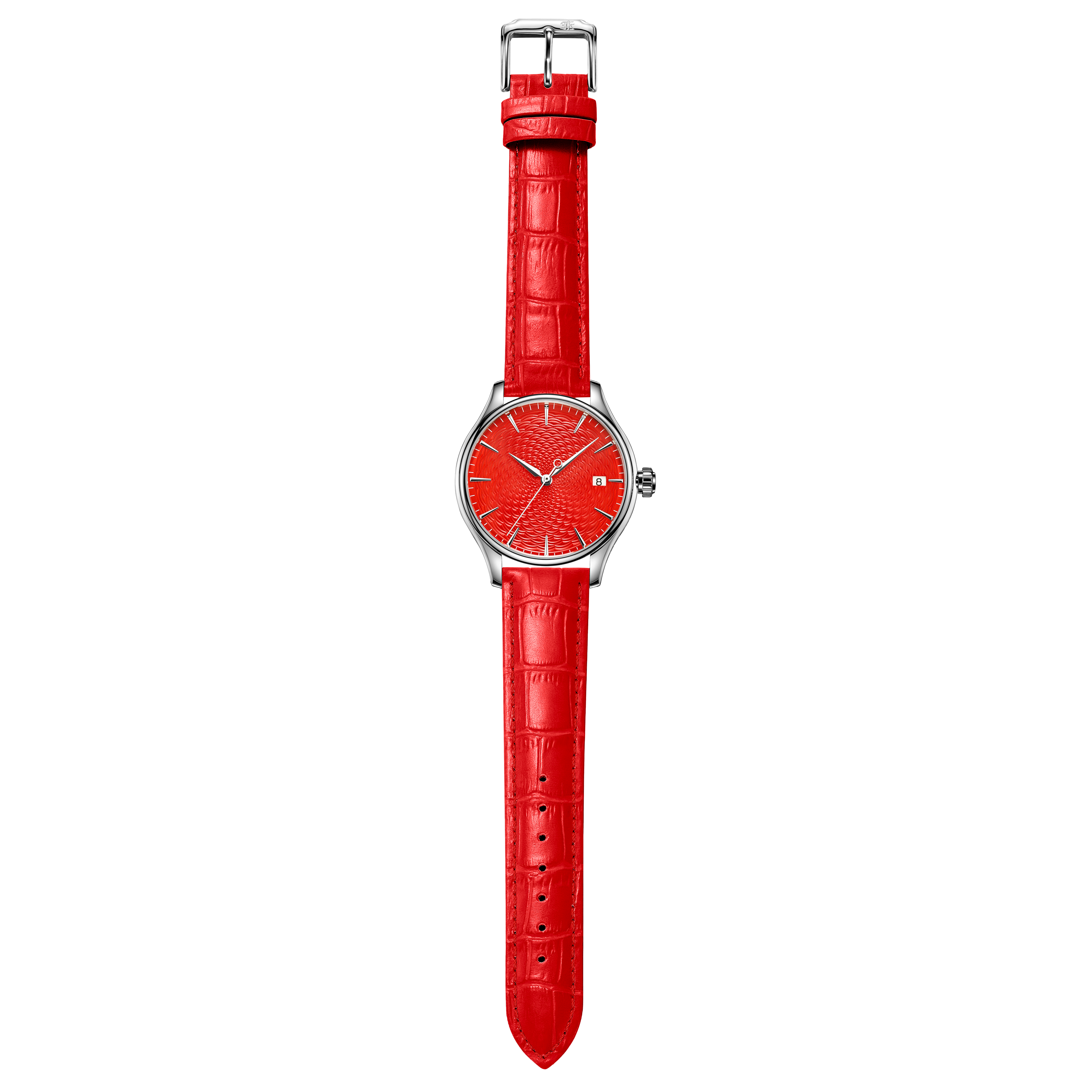
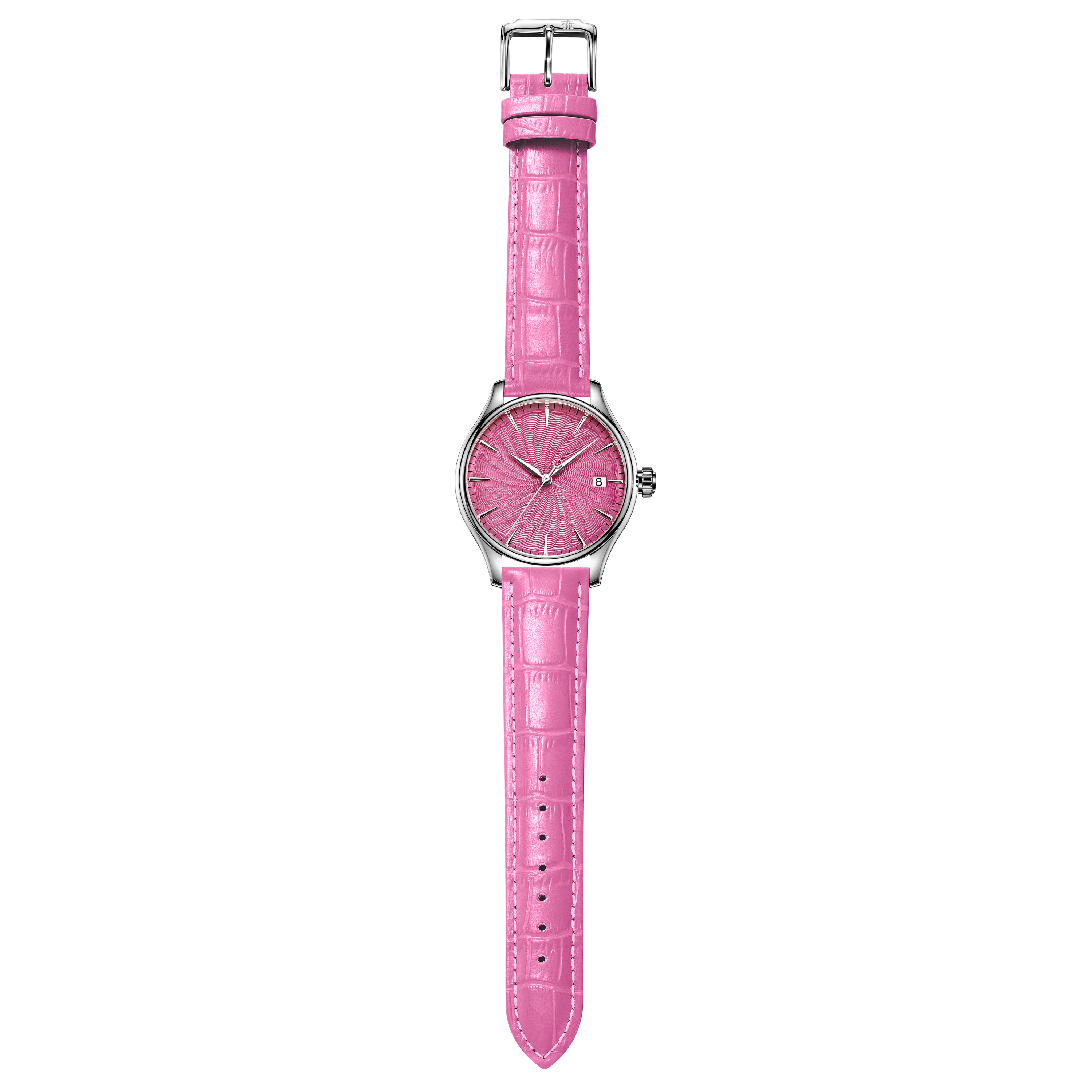
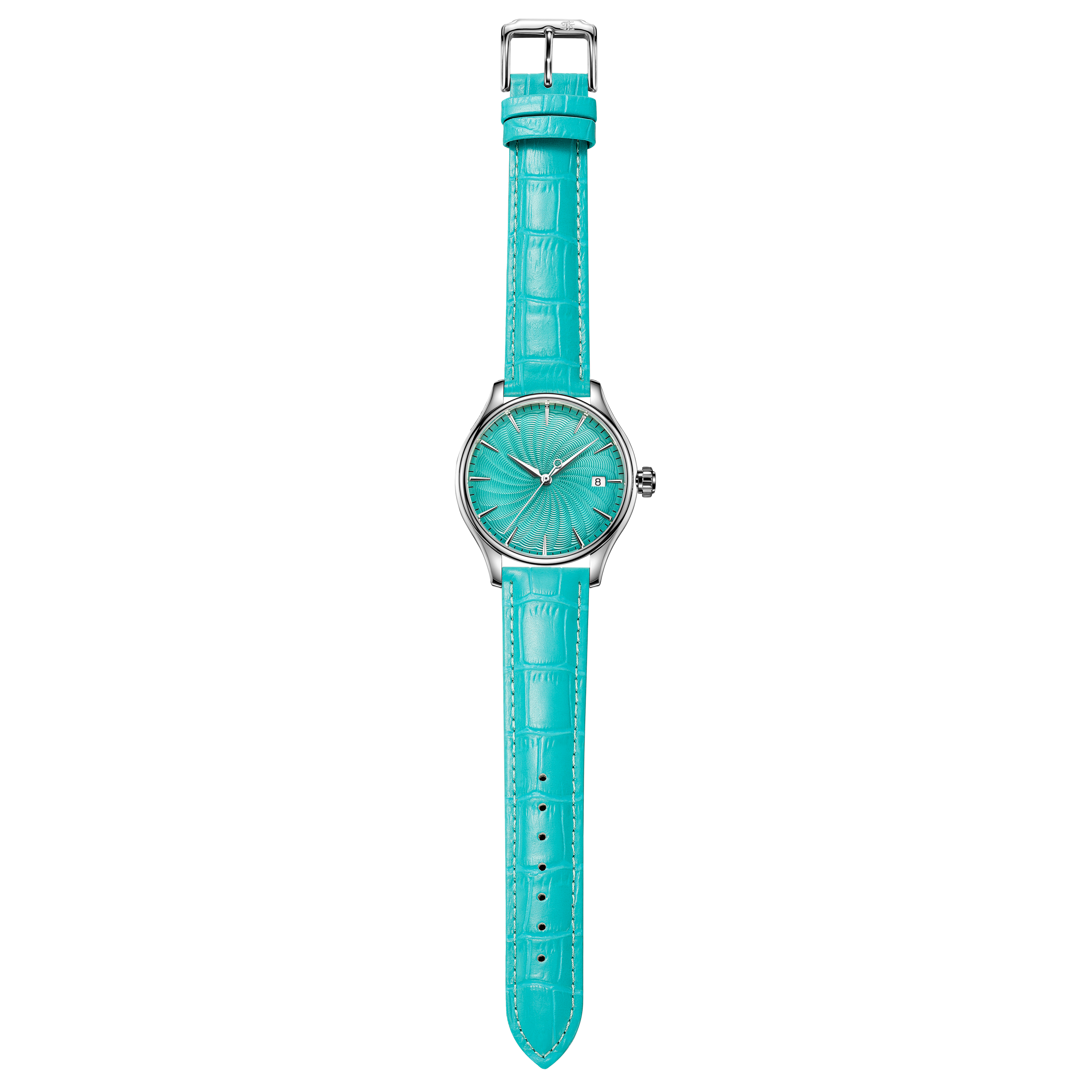
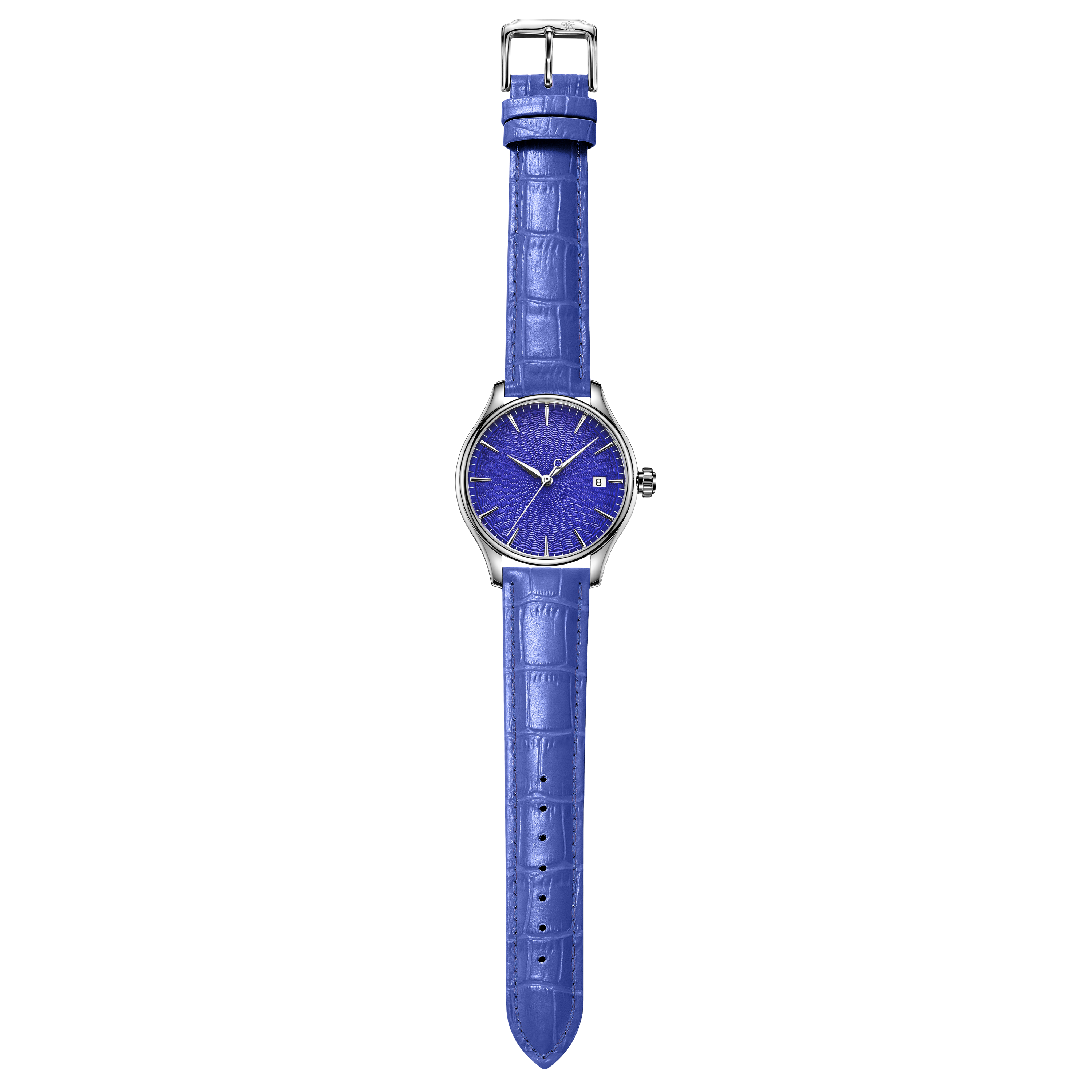
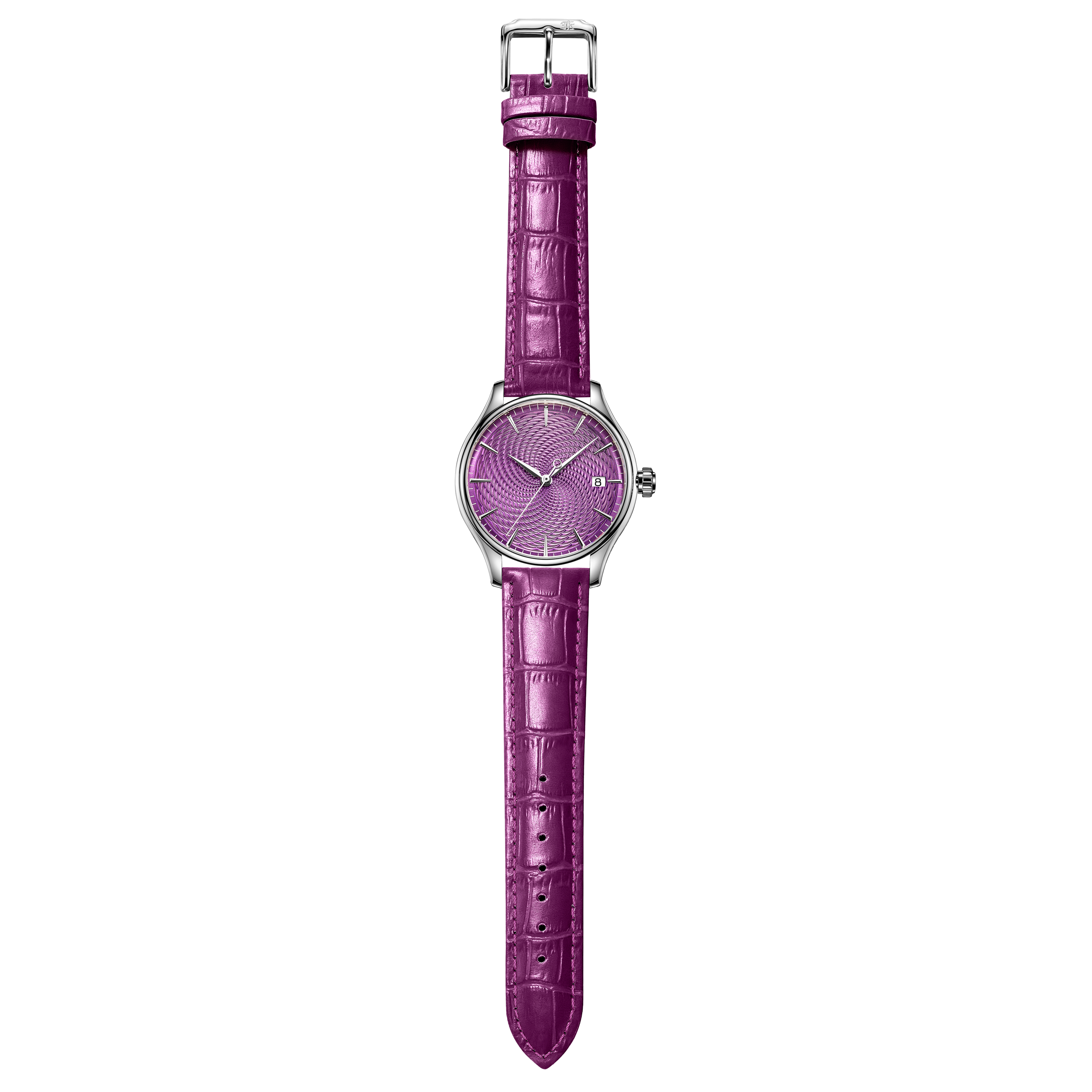


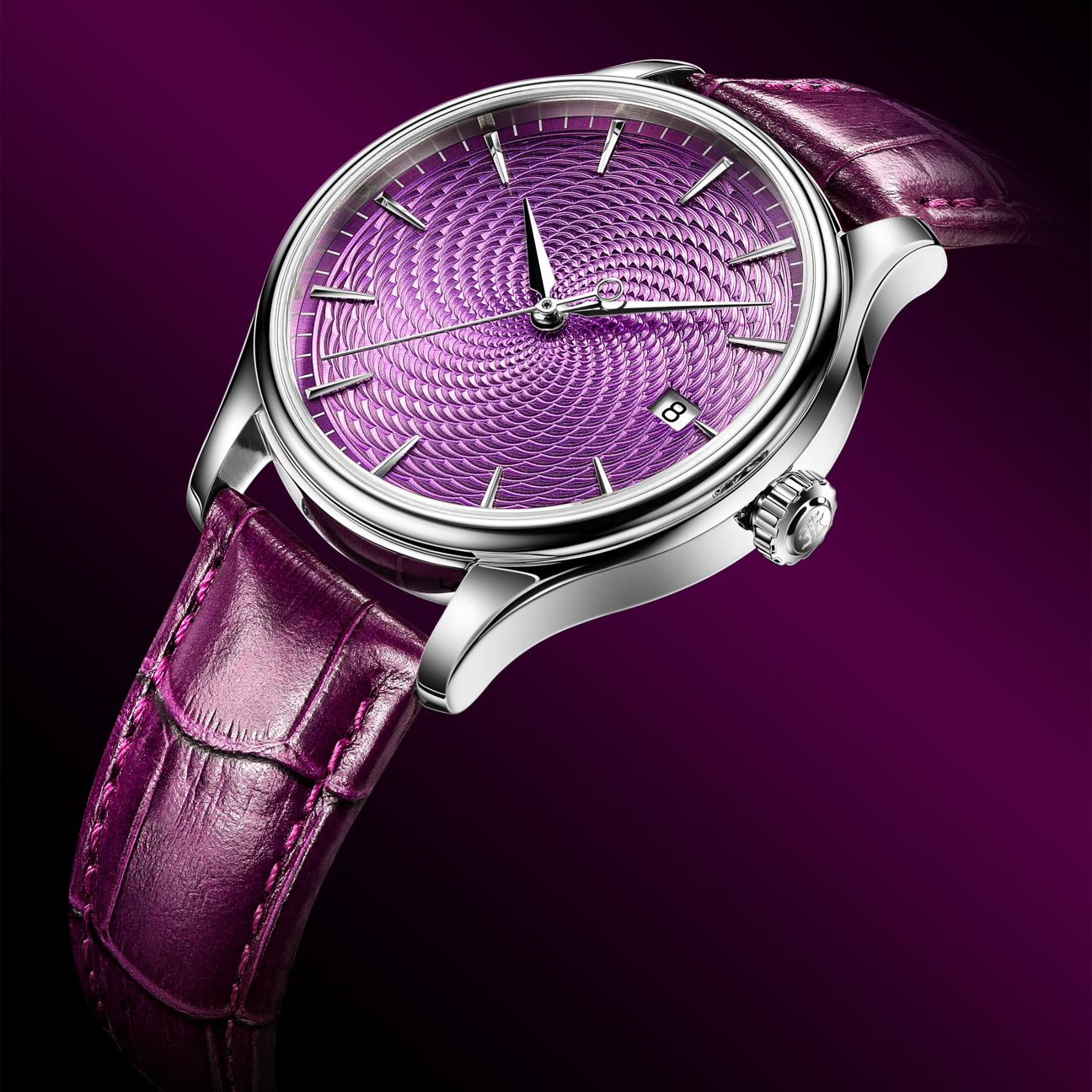
Beijing Enamel Factory J100-2 Heritage Guilloché Watch 36mm

Case
Case Shape: Round
Case Diameter: Approx. 36 mm
Case Thickness: Approx. 9.4 mm
Case Material: 316 Stainless Steel with PVD Coating
Crystal: Synthetic Sapphire
Water Resistance: 10 ATM
Net Weight: Approx. 53 g
Dial
Dial Type: Hand-Engraved Guilloché
Guilloché Technique: Hand-Executed Mechanical Guilloché
Dial & Strap: Color-Matched Design
Functions: Time Display & Calendar
Movement
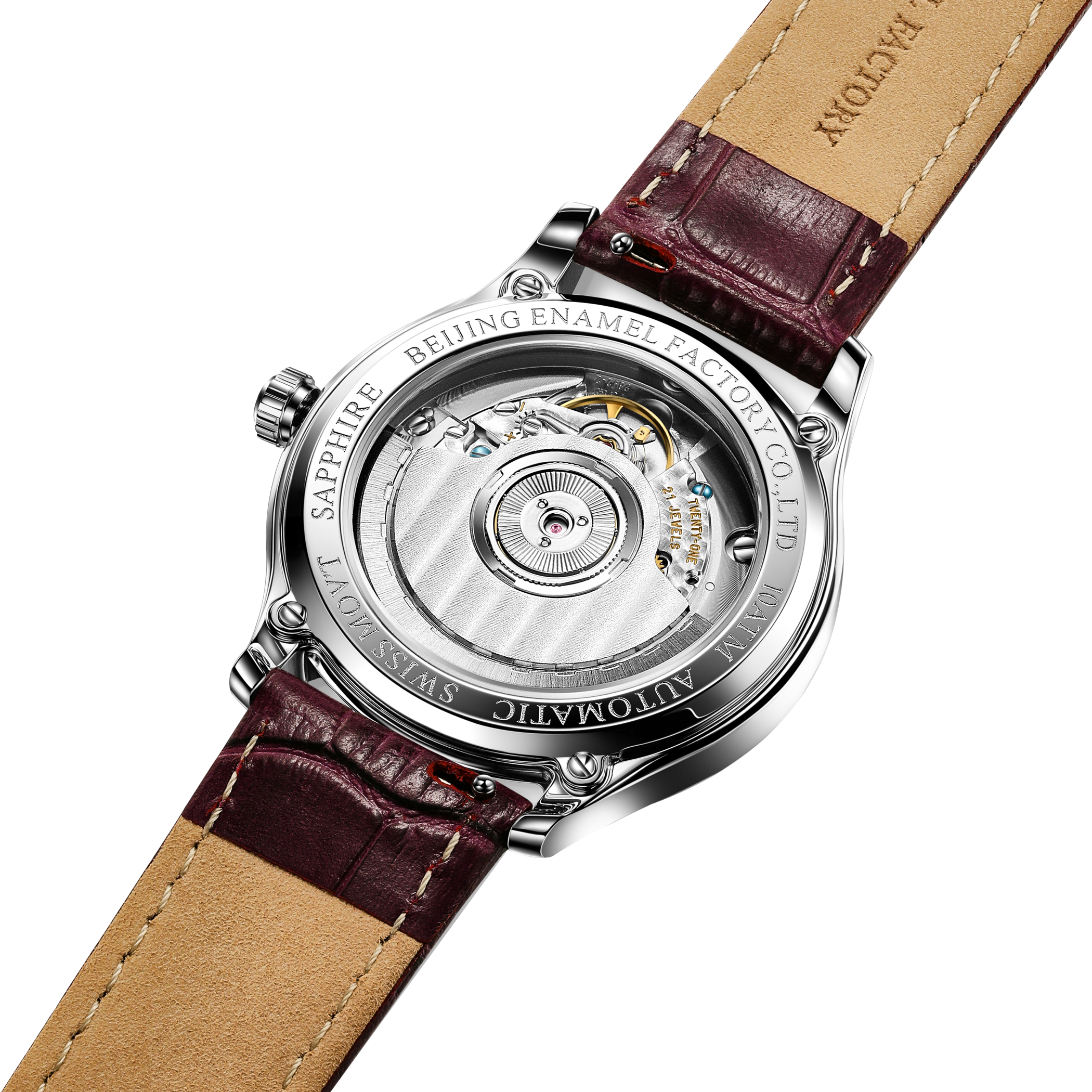
Movement: ETA 2892
Movement Type: Automatic Winding
Jewels: 21
Frequency: 28,800 vibrations/hour (4 Hz)
Power Reserve: Approx. 42 hours
Winding System: Bidirectional Automatic Winding
Strap
Material: Genuine Top-Grain Calfskin Leather
Buckle: Pin Buckle
Strap Length: Approx. 22 cm
Strap Width: Approx. 18 mm

Horology Planet provides a 24-month international warranty for Lucky Harvey watches purchased through Horology Planet.
The warranty period begins on the date of purchase shown on your Horology Planet order confirmation. Your order confirmation serves as valid proof of purchase and warranty coverage. No dealer stamp or separate warranty registration is required for purchases made through Horology Planet.
During the warranty period, the warranty covers material and manufacturing defects that were present at the time the watch was purchased. If a covered defect occurs under normal use and normal wearing conditions, Horology Planet will arrange for the watch to be inspected and, where applicable, repaired free of charge.
WHAT THE WARRANTY COVERS
The 24-month warranty covers defects in materials or workmanship that arise during normal use of the watch.
Mechanical watches are precision instruments, and under normal wearing conditions they are designed to operate reliably. If a manufacturing or material defect affects the normal operation of your Lucky Harvey watch during the warranty period, please contact Horology Planet's customer service team.
After receiving the watch and confirming that the issue is covered by the warranty, we will arrange the necessary repair through the appropriate service channel.
THE WARRANTY DOES NOT COVER
1. Normal wear and tear and natural aging, including scratches, surface marks, deterioration or discoloration of leather, textile, rubber or other non-metal straps, and normal wear of surface coatings or plating.
2. Damage caused by accidents or external impact, including but not limited to severe drops, knocks, crushing, dents, broken or cracked crystal, or other physical damage resulting from an accident or abnormal use.
3. Damage caused by improper use, misuse, negligence, or failure to follow the watch's operating and care instructions, including use outside the conditions specified for the watch.
4. Damage caused by unauthorized repair, modification, disassembly, or servicing performed by persons or service providers not authorized by Horology Planet or Lucky Harvey.
5. Damage resulting from modifications to the original condition of the watch, including aftermarket alterations, replacement of original components with unauthorized parts, or other modifications beyond the control of Horology Planet or Lucky Harvey.
6. Loss, theft, or cosmetic damage that does not affect the normal functioning of the watch.
7. Any claim for damages or compensation beyond the repair or service provided under this warranty, except where otherwise required by applicable law.
WARRANTY SERVICE PROCEDURE
If your Lucky Harvey watch requires warranty service, please contact Horology Planet Customer Service with your order number and a description of the issue. Photos or videos may be requested to assist with the initial assessment.
If the issue appears to be covered by the warranty, Horology Planet will provide instructions for returning the watch for inspection and service.
For customers located outside Hong Kong, the watch may need to be shipped to our designated service location in Hong Kong for inspection and repair. Our customer service team will coordinate the return process with you and provide the applicable shipping instructions.
Please do not send your watch to a repair center without first contacting Horology Planet and receiving return instructions.
Once the watch is received, our service team will inspect the watch to determine whether the reported issue is covered under this warranty. If the issue is confirmed to be a covered material or manufacturing defect, the applicable repair will be carried out at no charge.
If the damage is determined to be outside the scope of this warranty, we will contact you before proceeding with any chargeable repair.
## IMPORTANT NOTES
This warranty is provided in addition to, and does not limit, any rights you may have under applicable consumer protection laws.
Warranty service does not automatically extend or restart the original 24-month warranty period unless required by applicable law.
The warranty applies only to Lucky Harvey watches purchased through Horology Planet and supported by valid proof of purchase.
For any questions regarding warranty coverage or service, please contact **Horology Planet Customer Service**.
The Art of Time, Engraved by Hand
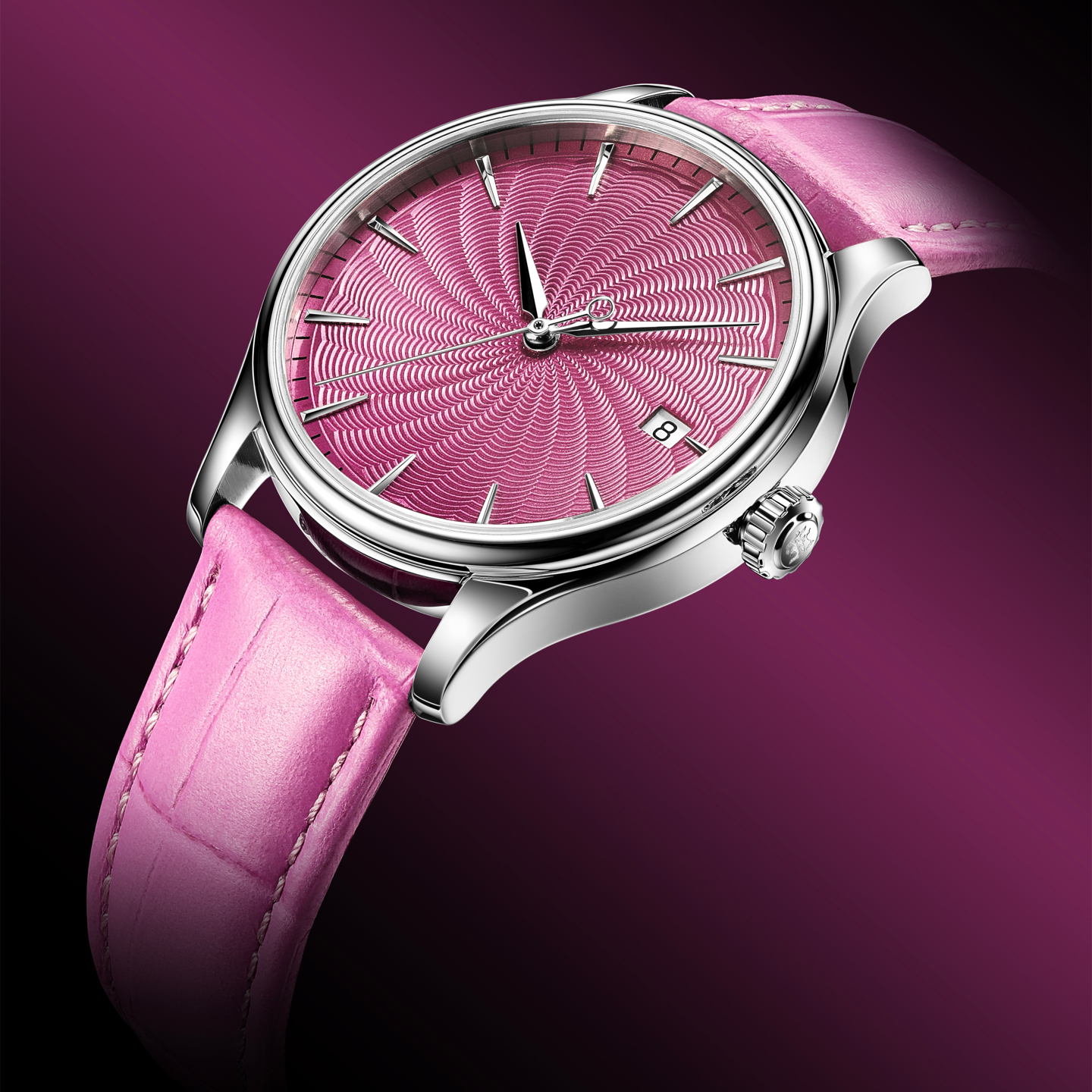
The J100-2 presents the refined side of traditional guilloché craftsmanship in a compact 36mm mechanical watch created for the modern woman. Its hand-engraved dial is produced through the precise combination of mechanical engraving and artisan control, with countless geometric lines creating a refined interplay of light, shadow, and texture across the surface. Behind the dial, the ETA 2892 automatic movement provides a faster 28,800 vibrations-per-hour frequency, 21 jewels, and approximately 42 hours of power reserve. The 316 stainless steel case is finished with a PVD coating and protected by synthetic sapphire crystal, while the vivid dial and matching genuine calfskin strap create a harmonious and elegant visual identity. With its 9.4mm slim profile, 10 ATM water resistance, bidirectional automatic winding, and calendar display, the J100-2 balances traditional decorative craftsmanship with the convenience of a contemporary automatic timepiece.
What Is Guilloché?
Guilloché, known in Chinese as Jilou (玑镂), is a highly precise mechanical engraving technique that creates intricate, repetitive geometric patterns by cutting controlled lines into a metal surface. Originating in 16th-century Europe, it was traditionally used to decorate jewelry, watches, cigarette cases, lighters, and other fine objects. Its importance in horology grew in the 18th century when Abraham-Louis Breguet (1747–1823) introduced guilloché as a signature element of watch dial design. Patterns such as waves, geometric grids, and sunburst structures subsequently became hallmarks of classical watchmaking. Unlike printing, stamping, or chemical etching, genuine guilloché is a subtractive process: material is physically removed from the dial through controlled mechanical cutting. The resulting grooves catch and reflect light from constantly changing angles, creating a dynamic interplay of brilliance, shadow, and depth. Every line therefore becomes part of both the dial’s visual composition and its mechanical character.
Where Precision Meets the Human Hand
Traditional guilloché is a demanding collaboration between specialized machinery and the craftsman’s hand. Two traditional machines are generally required: the
horizontal rose engine, used to create curved, circular, and complex geometric patterns, and the vertical guilloché machine, used primarily for straight, parallel, and linear structures. Yet the machine alone cannot produce a finished guilloché dial. During engraving, the craftsman must continuously control hand pressure, cutting depth, feed movement, rotational rhythm, and the interaction between tool and material. These decisions rely heavily on experience and tactile sensitivity. A deviation of only a few hundredths of a millimeter can disturb the symmetry of a repeating pattern, while an unstable cut may permanently damage the dial. This combination of mathematical repetition and human judgment makes guilloché fundamentally different from ordinary machine decoration. It requires years of training and disciplined practice, and the number of artisans worldwide capable of fully mastering traditional guilloché is estimated at fewer than 100—making it one of horology’s rarest decorative disciplines.
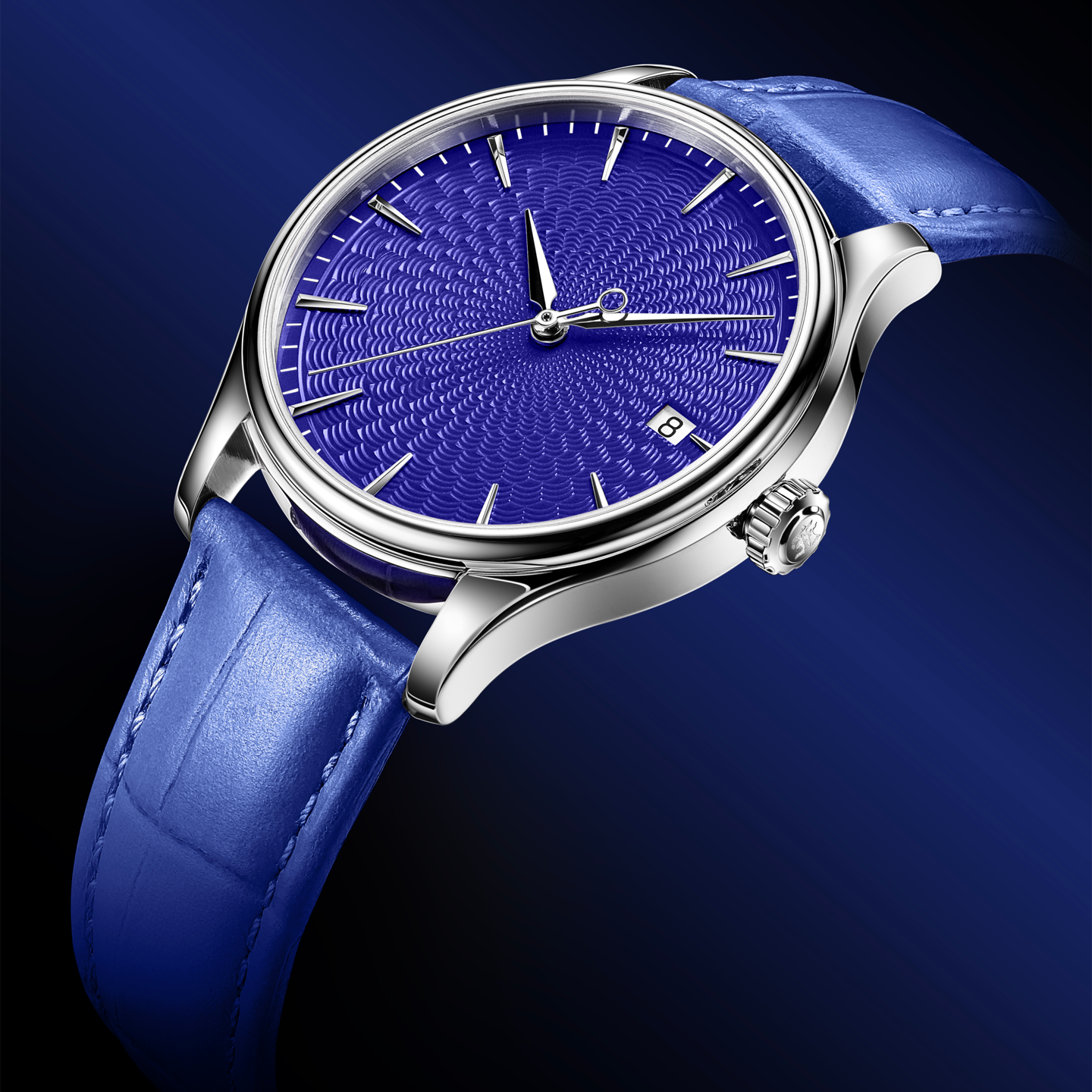
From Reverse Engineering to 0.02mm Precision
For decades, high-end guilloché remained concentrated within a limited number of European workshops, where knowledge was traditionally transmitted through apprenticeship rather than standardized documentation. Our own exploration began through enamel dial production, where dependence on external guilloché processing resulted in long lead times, additional costs, and restrictions on pattern development. We therefore began an independent effort to reconstruct and develop the technology ourselves. By studying finished guilloché pieces, analyzing their geometric principles, and reconstructing machine structures from limited visual and technical references, our craftsmen gradually developed proprietary equipment. The first-generation machine could produce wave and straight-line patterns, but its precision was approximately
0.10mm. Through repeated testing and improvements to transmission, structural rigidity, and cutting stability, we developed an integrated horizontal-and-vertical guilloché machine, combining the functions of two traditional machines in one platform. Its machining precision was subsequently improved to approximately 0.02mm. This fivefold improvement opened the way to finer patterns, more consistent engraving, and greater creative freedom while preserving the essential role of the craftsman’s hand.
PVD-Coated Steel Case
A round case in 316 stainless steel receives a PVD coating, creating a distinctive contemporary presence while retaining the durability expected from a modern mechanical watch.
Sapphire Crystal Protection
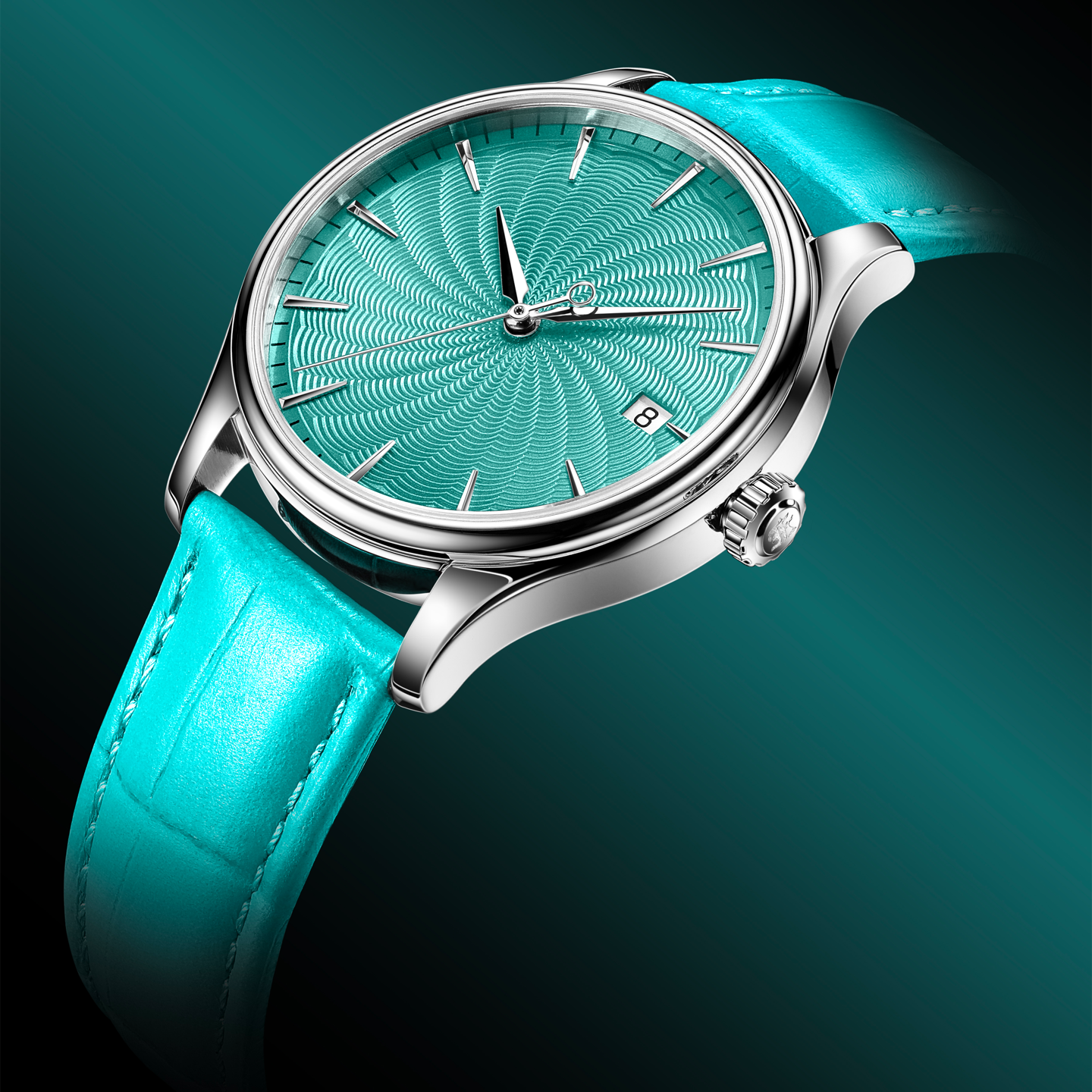
Synthetic sapphire crystal provides excellent scratch resistance and optical clarity, protecting the intricately engraved dial while preserving its visual depth.
Coordinated Color Design
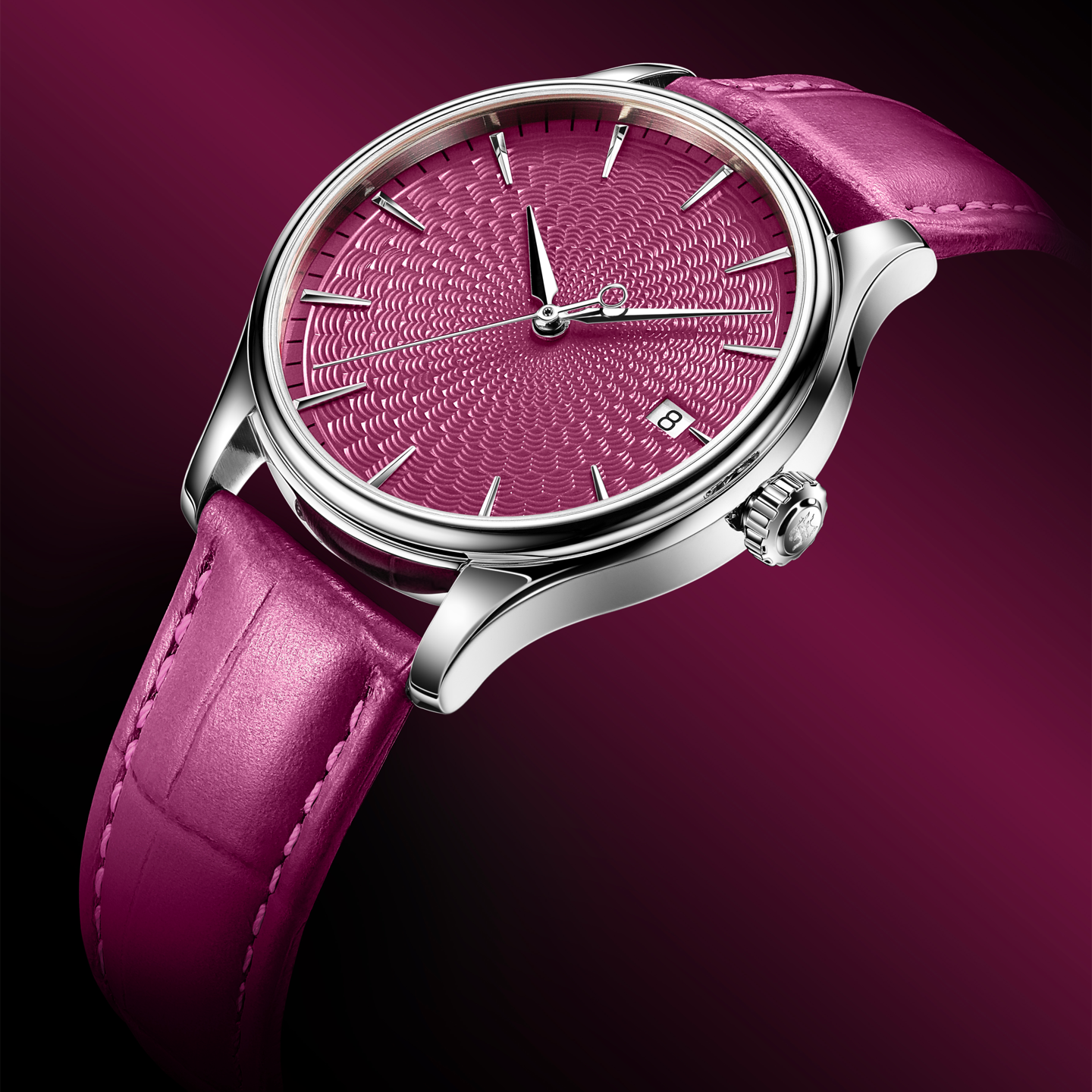
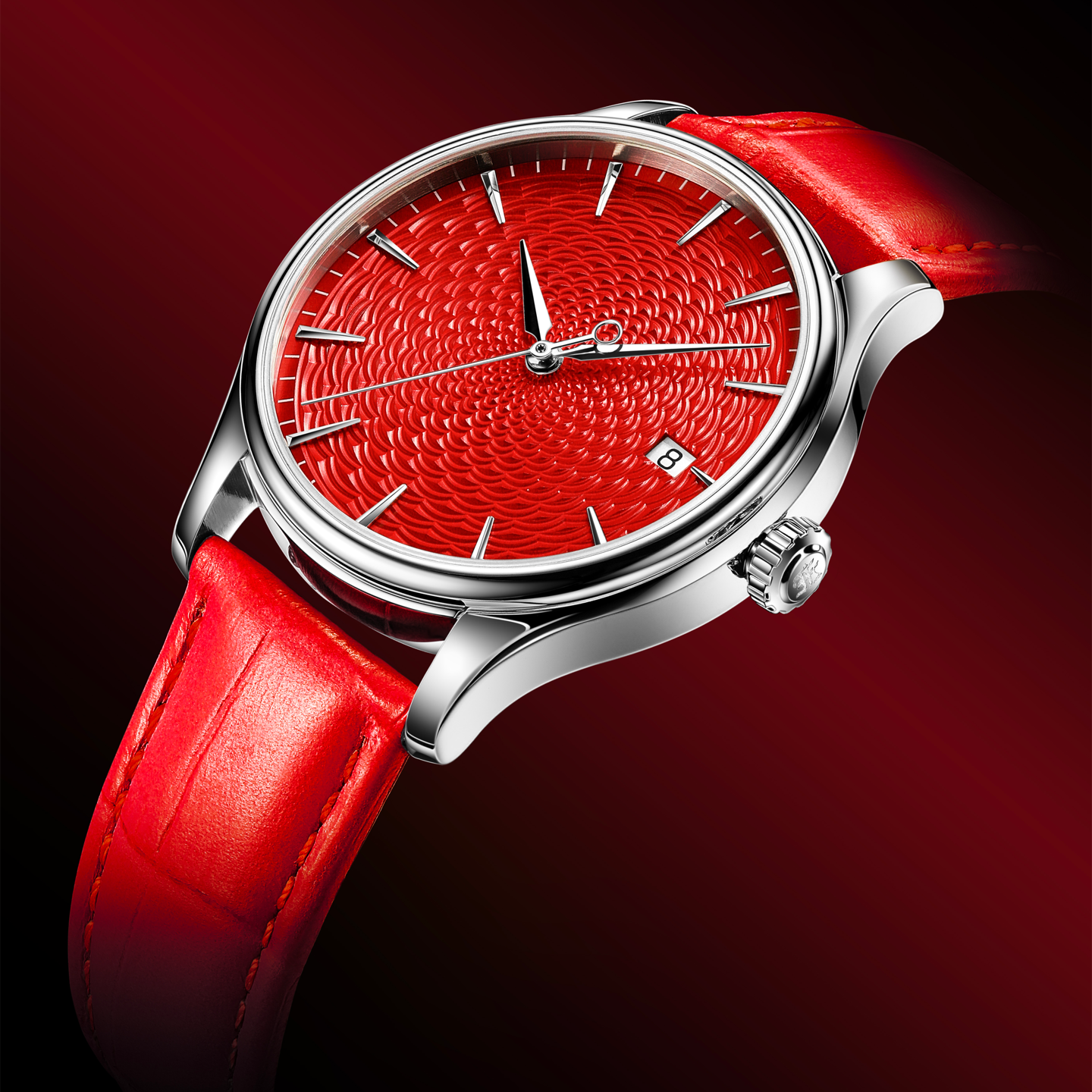
The vivid dial is paired with a matching genuine top-grain calfskin strap, creating a unified color palette with a distinctive and elegant presence.
10 ATM Water Resistance
10 ATM water resistance provides practical protection for everyday wear, adding modern usability to a watch rooted in traditional decorative craftsmanship.

Beijing Enamel Factory
Founded in 1956 through the consolidation of 42 private enamel workshops and former imperial workshops, Beijing Enamel Factory is a major institution dedicated to preserving and developing Jingtai Lan (Cloisonné enamel), a nationally recognized intangible cultural heritage of China. It brings together leading masters of arts and crafts and highly skilled technicians, combining traditional handwork with modern craftsmanship. Its “Jing Fa” cloisonné creations have been presented as official diplomatic gifts to foreign heads of state and are preserved in important cultural and architectural collections. With roots connected to the imperial court tradition, the factory represents a living lineage of Chinese enamel craftsmanship, where heritage, precision, artistry, and generations of accumulated technical knowledge continue to evolve.




Blog posts

Why Are We Hosting a Museum-Grade Horological Exhibition in This Millennia-Old Capital?
The ultimate endgame for global luxury lies in the strategic rivalry of cultural value. When a global collector acquires a high-end Chinese timepiece not because it is 'cheaper than a Swiss watch,'...

The Lucky Harvey Sound of Nature ZLS402-3 brings genuine mechanical novelty to a saturated market tier.

Kinetic Whimsy on a Budget: A Hands-On Review of the Lucky Harvey Silver Owl Automaton
The Lucky Harvey Silver Owl ZLS402-3 is a breath of fresh air in an industry that often takes itself too seriously. It democratizes mechanical kinetic art without sacrificing build quality.