
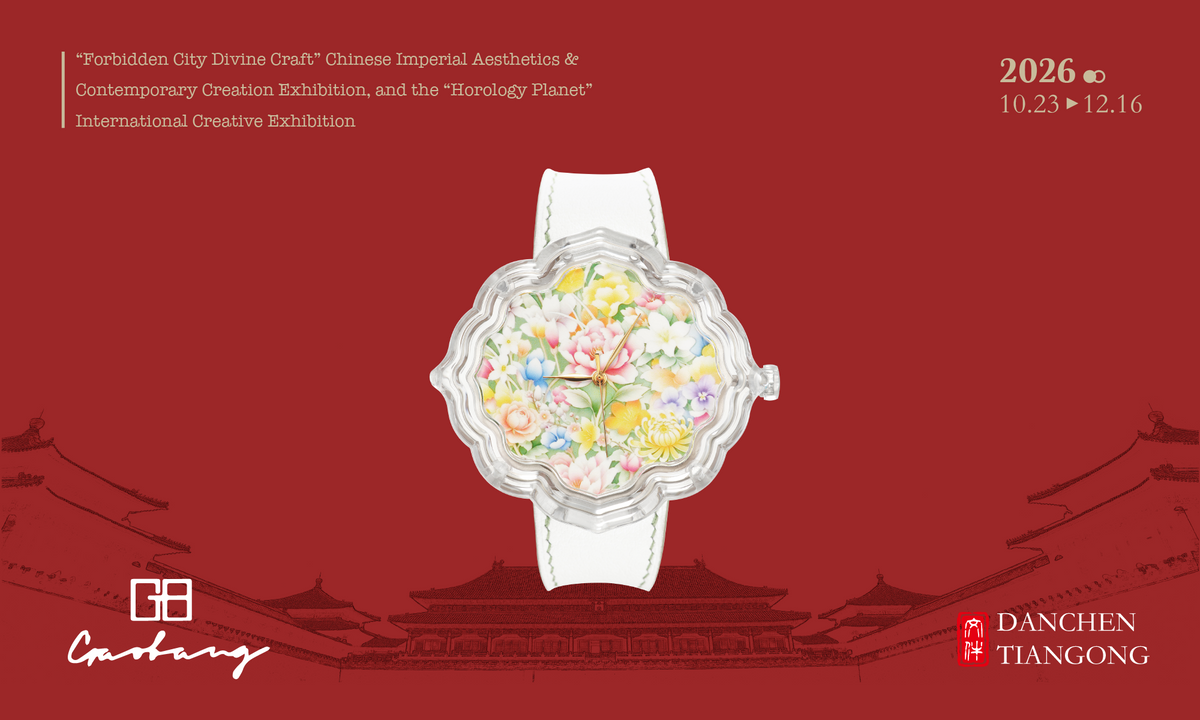
Horology Planet Exhibition Series — 05
In October 2026, Beijing becomes a meeting point for Chinese imperial aesthetics, traditional craftsmanship, and contemporary design. Held at the National Foreign Cultural Trade Base (Beijing), the “Forbidden City Divine Craft” Chinese Imperial Aesthetics & Contemporary Creation Exhibition and the “Horology Planet” International Creative Exhibition bring together a range of creative works that explore the connections between Eastern cultural heritage and modern craftsmanship.
The exhibition is about more than the objects on display. It also asks how traditional art forms can continue to evolve, finding new relevance through modern materials, innovative design, and precision engineering. From decorative techniques rooted in imperial workshops to the intricacies of independent watchmaking, the works on show offer different perspectives on how the past can inform the present.
As part of this exhibition series, Horology Planet takes a closer look at the participating watch brands and the ideas behind their creations.
GAOBANG: Bringing Chinese Heritage into Contemporary Watchmaking
For GAOBANG, Chinese tradition is not simply something to draw inspiration from. It is a living design language, one that can be reinterpreted through the art of modern watchmaking. From the architecture of the Forbidden City to the flowers of imperial gardens and the ingenuity of historic Chinese timepieces, the brand finds ways to bring the past into the present.
Much of this approach begins with looking closely at the details. A feature of traditional architecture might suggest the shape of a watch case. Flowers once admired in imperial gardens find new life in miniature enamel paintings. Even the construction of historic pocket-watch movements can offer ideas for a contemporary mechanical design. Rather than reproducing historical forms outright, GAOBANG looks for ways to preserve their character while giving them a new purpose.
The result is a distinctive blend of Chinese cultural heritage, traditional craftsmanship, and independent watchmaking. The timepiece GAOBANG presents at the exhibition brings these elements together in a sculptural sapphire crystal case, a hand-painted enamel dial, and a mechanical movement inspired by the architecture of traditional Chinese pocket watches.
GAOBANG Imperial Garden Watch: A Meeting of Architecture, Art, and Mechanics

The story of this watch began with a visit to the Forbidden City. Standing before Chonghua Gate, the GAOBANG team noticed the twelve divisions formed by its glazed roof tiles. There was something unexpectedly familiar about their arrangement, almost as if the structure had been waiting to become a watch case. That moment sparked the idea for an unconventional sapphire crystal case, with twelve positions marking the hours.
The design gives particular emphasis to the 3, 6, 9, and 12 o’clock positions. By integrating the hour markers into the case itself, GAOBANG avoids the need for separate markers on the dial, leaving more space for the artwork to take centre stage.
Another important source of inspiration came from Qianlong Garden, where flowers long admired in Chinese imperial culture provided the foundation for the dial. Peonies, Chinese roses, orchids, chrysanthemums, lotuses, and wintersweet were chosen for their distinctive forms and enduring beauty. Each is painted by hand using the traditional technique of miniature enamel painting. The work requires patience and a steady hand, with the intricate floral details giving the dial the character of a miniature garden.

The watch's connection to Chinese history extends beyond its exterior. During a visit to the Clock Gallery in the Forbidden City, GAOBANG was reminded of the legacy of Chinese-market pocket watches, a subject also explored by renowned independent Chinese watchmaker Jiang Dayu. These timepieces hold a special place in horological history, not only for their craftsmanship and mechanical ingenuity, but also for their elegant designs, extensive production, and influence across international markets.
Drawing on the construction of the traditional Chinese-market pocket-watch movement known as the Da Ba Jian (Eight Great Pieces), GAOBANG has adapted elements of its architecture for this modern wristwatch. Through the transparent caseback, the mainspring barrel and balance wheel create a balanced, symmetrical composition. The barrel also incorporates a Maltese cross stopwork mechanism, which helps limit the mainspring's operating range and maintain a more controlled delivery of power.
The movement's reverse plate carries the same attention to detail. Its hand-chased engraving takes inspiration from the ceiling well at Guhuaxuan in Qianlong Garden, another architectural detail within the Forbidden City. The decoration was created by a young Chinese master engraver specialising in gold engraving, adding a layer of traditional artistry that connects the movement to the architectural inspiration behind the watch.
Even the strap has been considered as part of the overall composition. Cream-coloured leather and green stitching provide a restrained contrast to the blue sapphire crystal case and the richly decorated enamel dial. The combination brings a sense of balance to a design filled with intricate details, allowing each element to stand out without competing for attention.
What makes this timepiece compelling is the way its different influences come together. Imperial architecture informs the case, garden flowers shape the dial, and the legacy of Chinese pocket-watch making finds expression in the movement. Sapphire crystal, miniature enamel painting, hand engraving, and mechanical engineering are brought together in a watch that draws on tradition without being confined by it.
GAOBANG also sees this design as a starting point rather than a finished chapter. The watch's underlying concept leaves room for future dial variations, creating opportunities to explore other flowers and cultural themes within the same design language.
For GAOBANG, the aim is not simply to put Chinese motifs on a watch. It is to explore how the country's artistic and horological heritage can continue to evolve through contemporary design and craftsmanship.
Key Specifications
- Case Material: Sapphire crystal
- Case Dimensions: 60 × 55 mm
- Case Thickness: 15 mm
- Strap: Cream-coloured leather with green stitching
- Buckle: Pin buckle
- Dial Craft: Hand-painted miniature enamel
- Movement: Manual-winding mechanical movement
- Power Reserve: 72 hours
- Frequency: 21,600 vibrations per hour (3 Hz)
- Functions: Hours, minutes, and seconds
—————————————————————————————————————————————————
Exhibition Guide
- Exhibition Name: “Forbidden City Divine Craft” Chinese Imperial Aesthetics & Contemporary Creation Exhibition, and the “Horology Planet” International Creative Exhibition
- Opening Date: October 23, 2026
- Exhibition Dates: October 23, 2026 – December 16, 2026
- Venue: 3rd Floor Art Space, Building D7, National Foreign Cultural Trade Base (Beijing), No. 3 Jinhang East Road, Shunyi District, Beijing
- Organizer: National Foreign Cultural Trade Base (Beijing)
- Academic Support: Research Group on Qing Dynasty Court Craftsmanship Inheritance Examples, The Palace Museum; Watchina
- Executive Curator: Horology Planet